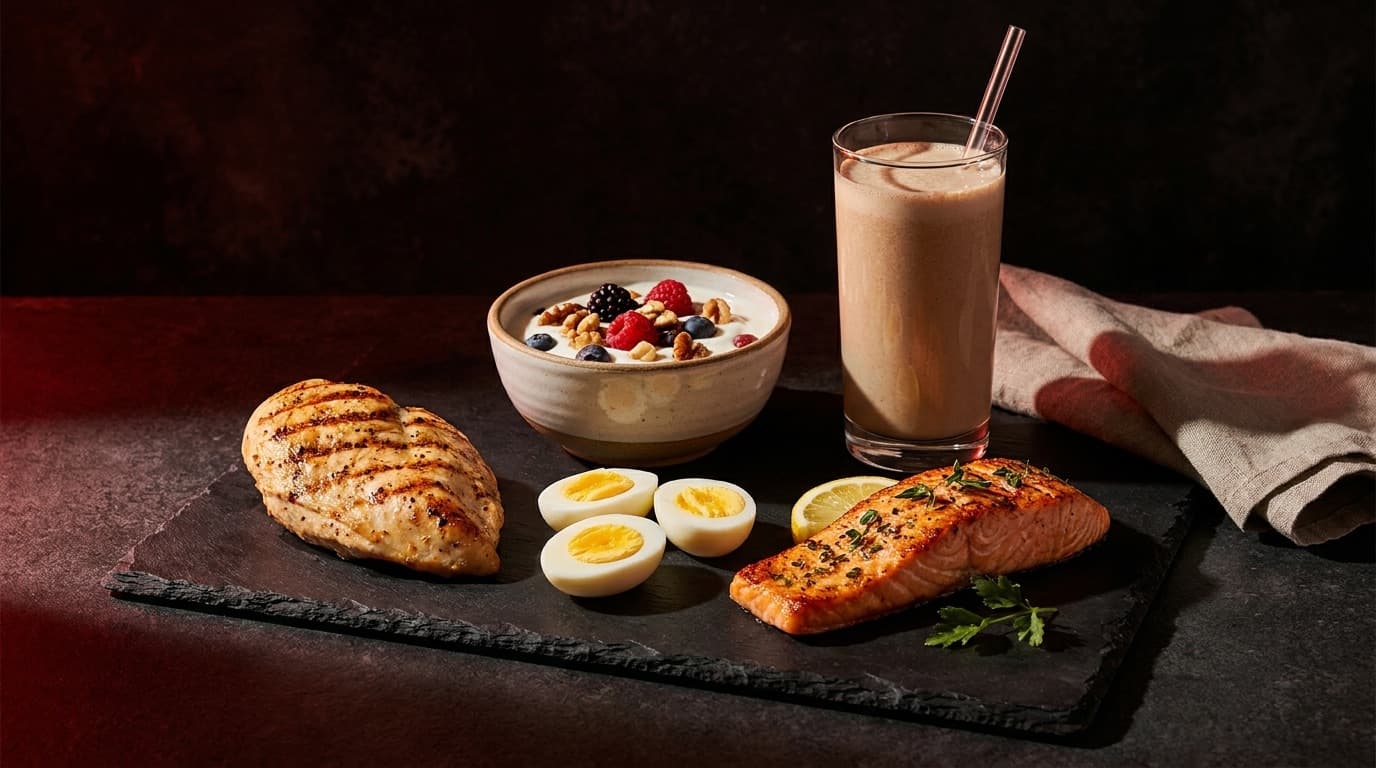
Protein is the one macronutrient I never let a client get wrong — it's the single biggest dietary lever for building muscle and staying lean. But there's a lot of noise around it: the "anabolic window," whether you can only absorb 30g at a time, which sources are "best." After 18 years, let me cut through it with what actually matters.
Key takeaways:
- Your daily total matters most: 1.6–2.2 g per kg of bodyweight.
- Spread it across 3–5 meals of ~30–50 g each — modestly better than one or two big hits.
- The "anabolic window" is much wider than the old 30-minute myth — hours, not minutes.
- Animal sources are complete proteins; plant eaters should combine and eat a bit more.
- Dial your exact target with the macro calculator.
How much protein do you actually need?
For building or keeping muscle, aim for 1.6–2.2 grams of protein per kilogram of bodyweight per day. For an 80 kg person, that's roughly 130–175 g daily. This range is well supported by research as the point where muscle protein synthesis is maximized; eating far more doesn't build extra muscle (Morton et al. meta-analysis). When cutting, stay at the higher end (closer to 2.2 g/kg) to protect muscle in a deficit.
This daily number is the foundation. Everything about timing and sources below is a refinement on top of hitting it — get the total right first.
Does protein timing matter?
A little, but far less than the old "anabolic window" hype suggested. The idea that you must slam protein within 30 minutes of training or "lose your gains" is mostly a myth — the window for post-workout protein is several hours wide. What does help modestly is spreading your protein evenly across the day in 3–5 doses rather than cramming it into one or two meals, because each dose triggers muscle protein synthesis.
So practically: eat protein at each meal, have some within a few hours of training (before or after), and stop stressing about the stopwatch. Your daily total and even distribution beat precise timing every time.
How much protein per meal?
Aim for roughly 0.4 g per kg of bodyweight per meal, which lands most people at 30–50 g per meal across 3–5 meals. There's an old claim that you can "only absorb 30 g at once" — that's not quite right; your body uses excess protein, just slightly less efficiently for muscle-building per sitting. Hitting your daily total is what counts, but spacing it into solid doses is the smart way to do it.
Best protein sources, ranked
Here's how I rank common protein sources by quality, completeness, and practicality:
| Rank | Source | Protein per typical serving | Notes | | --- | --- | --- | --- | | 1 | Chicken/turkey breast | ~30 g per 120 g | Lean, cheap, versatile | | 2 | Eggs / egg whites | ~6 g per egg | Complete, cheap, high quality | | 3 | Lean beef | ~25 g per 100 g | Complete + iron, creatine | | 4 | Fish (salmon, tuna, cod) | ~22–25 g per 100 g | Complete + omega-3s | | 5 | Greek yogurt / cottage cheese | ~15–20 g per cup | Slow-digesting, great snack | | 6 | Whey/casein protein | ~25 g per scoop | Convenient, fast (whey) or slow (casein) | | 7 | Tofu/tempeh/edamame | ~10–18 g per serving | Best complete plant options | | 8 | Legumes (beans, lentils) | ~15 g per cup | Incomplete alone — combine with grains |
Animal sources are "complete" — they contain all essential amino acids in good ratios. Plant sources are often lower in one or more amino acids, so plant-based eaters should combine sources (e.g., rice + beans) and aim for the higher end of the protein range.
Get your daily total right first, spread it across your meals second, and worry about everything else third — or not at all.
What about protein quality and leucine?
The amino acid leucine is the main trigger for muscle protein synthesis, and you generally want ~2.5–3 g of leucine per meal to maximize the response. Animal proteins (whey, eggs, meat, dairy) are naturally high in leucine, which is why they're so effective. Plant proteins tend to be lower, another reason plant-based athletes benefit from slightly higher total intake and combining sources. If you eat enough quality protein across the day, you're getting enough leucine without counting it.
Frequently asked questions
Should I take protein before or after a workout?
Either works — the post-workout "window" is hours wide, not minutes. Having protein within a few hours on each side of training is plenty. If you trained fasted, eating protein afterward is a good idea, but there's no need to panic-chug a shake the second you rack the bar.
Is too much protein bad for you?
For healthy people, high-protein diets are safe and don't harm the kidneys. The main downside of overeating protein is that it displaces other foods or adds excess calories. There's also no extra muscle benefit beyond ~2.2 g/kg — more just gets used for energy.
Do I need protein powder?
No — it's convenient, not essential. Whole foods can cover your entire target. But whey or casein is a cheap, fast way to hit your number on busy days. Treat powder as a tool to fill gaps, not as a requirement or a magic muscle-builder.
Can vegetarians and vegans build muscle?
Yes, easily — with attention. Plant eaters should aim for the higher end (around 2 g/kg), combine sources for complete amino acid profiles, and lean on tofu, tempeh, edamame, legumes, and plant protein powders. The muscle-building principles are identical; the food selection just takes a bit more planning.
Protein is the foundation, and most people are closer to getting it right than they think — they just need the number and a plan to hit it. Want yours dialed in alongside your training? Start with the macro calculator, then apply for coaching and I'll build the whole plan around you.